About
In Aotearoa, ageing is often treated as a psychological or emotional issue, which quietly moves the conversation away from the systemic gaps in how society engages an older population. Age Concern Auckland found that 59% of elders felt lonely or socially isolated, and the country's over-65 population is set to pass one million by 2028. I wanted to look at that gap through a design lens.
The proposal was written to be informed by, and to work alongside, Oceania Healthcare, one of New Zealand's largest aged-care providers, and its Green Star Communities sustainability goals. It builds its case from the research up: biophilia, Attention Restoration Theory, and evidence that contact with nature strengthens psychological resilience, especially later in life.
All of it points at one question:
“How might we design a mobile application that uses gamified social gardening to reduce feelings of alienation and social isolation, and promote positive ageing among elders in Aotearoa?”— the proposal's How Might We
Outcome
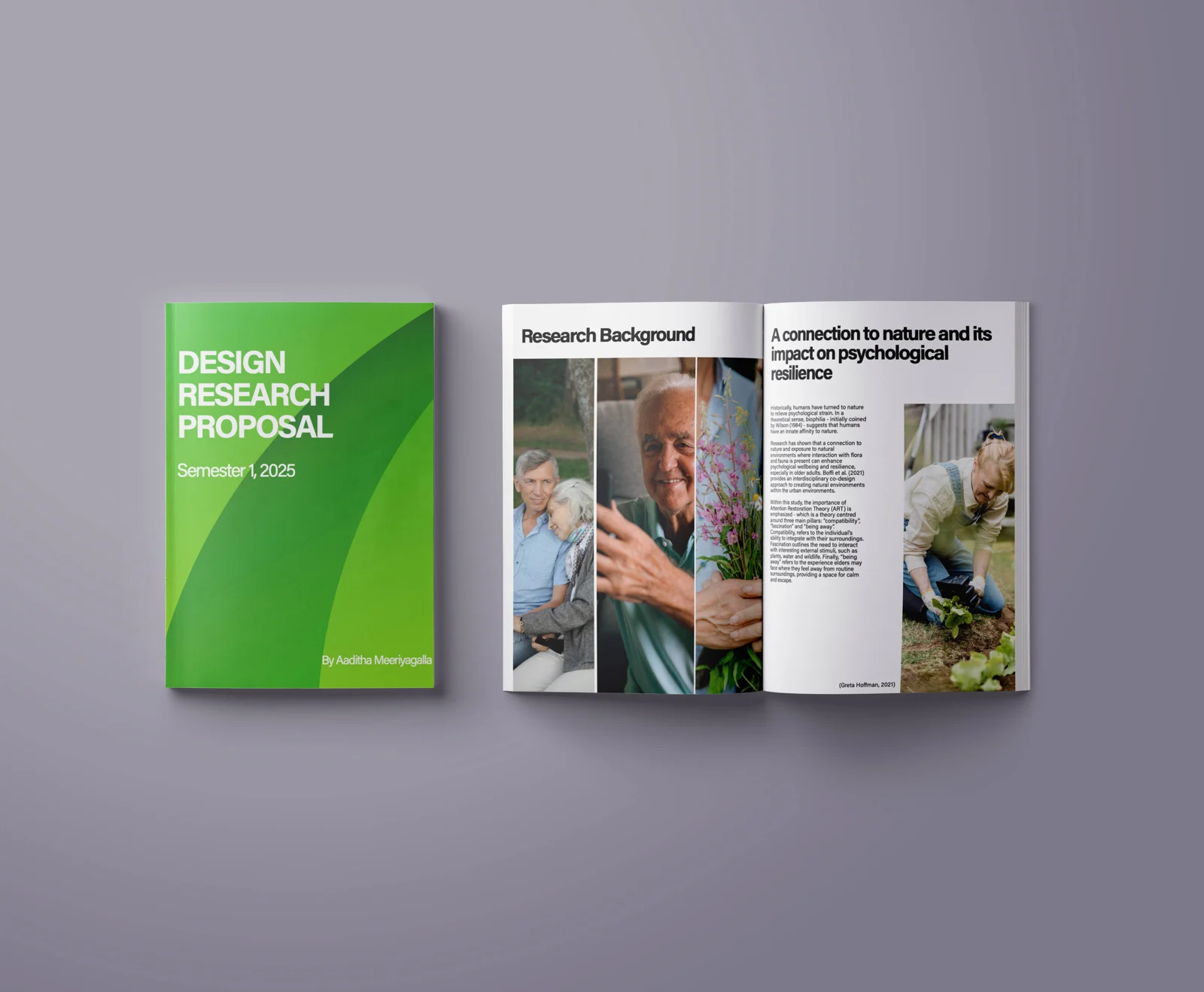
The deliverable is a 22-page document: problem definition, research background, a human-centred design methodology adapted from IDEO, and honest sections on ethics, limitations and assumptions. I collated and synthesised the research in Miro, mindmapping the themes into a structure, then designed and typeset the whole thing in Adobe InDesign, an editorial layout you could hand to a partner like Oceania.
Beyond the mark, its real outcome was direction. The How Might We, the nature-and-reflection thesis, and the Oceania partnership all carried straight into my capstone, Bud. This is where that project actually started.
Read it
All 22 pages, laid out as a spread. Drag a page, click a side, or use the arrows to turn.
SEE NEXT